Seattle Rent in 2026: What Apartments Cost and What You Need to Earn
Seattle's median rent was $2,073 a month in October 2026, and a one-bedroom cost $1,935 to $2,211 depending on the data source, with rents flat to slightly lower than a year earlier. Keeping a one-bedroom at 30 percent of income takes $77,400 to $88,440 a year.
A typical Seattle apartment rented for $2,073 to $2,251 a month in fall 2026, depending on whose data you use, and rents were flat to slightly lower than a year earlier. A one-bedroom cost $1,935 to $2,211. At the common guideline of spending no more than 30 percent of income on rent, that one-bedroom calls for $77,400 to $88,440 a year in household income.
Each figure below names its source and the month it covers. Rent trackers measure different sets of apartments, so their numbers never match exactly, and this guide gives the range with the reason for it.
What is the average rent in Seattle?
| Source | What it measures | Seattle | Period |
|---|---|---|---|
| Apartment List | Median rent across all rentals | $2,073 | October 2026 |
| Zillow Observed Rent Index | Typical rent across houses, condos and apartments | $2,227 | September 2026 |
| RentCafe (Yardi Matrix) | Average rent in buildings with 50 or more units | $2,251 | Updated October 30, 2026 |
Apartment List estimates the rents people sign leases for, starting from Census Bureau rent statistics and updating them with its own listings. Zillow’s index takes the middle band of listed rents (the 35th to 65th percentile) and weights it to the city’s whole rental stock. RentCafe counts only large apartment buildings. All three land between $2,073 and $2,251.
How much is a one-bedroom apartment in Seattle?
| Apartment | Monthly rent | Source | Yearly income to keep rent at 30% |
|---|---|---|---|
| Studio | $1,621 | RentCafe average | $64,840 |
| One-bedroom | $1,935 | Apartment List median | $77,400 |
| One-bedroom | $2,211 | RentCafe average | $88,440 |
| Two-bedroom | $2,415 | Apartment List median | $96,600 |
| Two-bedroom | $2,873 | RentCafe average | $114,920 |
| Three-bedroom | $3,706 | RentCafe average | $148,240 |
Sources: Apartment List, October 2026; RentCafe, updated October 30, 2026. The last column is monthly rent times 40, which is the yearly income at which rent equals 30 percent.
RentCafe also reports average sizes: 453 square feet for a studio, 666 for a one-bedroom and 982 for a two-bedroom.
Are rents dropping in Seattle?
Slightly, by most measures. Apartment List found the Seattle median down 2.1 percent from October 2025 and down 0.7 percent from September 2026, while the national median rose 0.1 percent over the year. Seattle rents climbed 1.6 percent from January to October 2026, compared with 5.6 percent over the same months of 2025.
RentCafe’s average is down 1 percent from a year earlier, from $2,274 to $2,251. Zillow’s index points the other way, up 0.5 percent from $2,215 in September 2025 to $2,227 in September 2026.
Closer to Eastlake, CoStar reported on March 17, 2026, that rent growth in the Lake Union area, among the strongest in the region a year earlier, had turned negative by early 2026 as demand cooled.
Apartment List’s national report describes October as the start of the rental off-season, when fewer people move and owners offer modest discounts. It also found that 32 percent of apartment properties nationwide offered a concession worth at least one month of free rent in October 2026. Ask every building what it is offering.
Is rent expensive in Seattle?
Yes in dollars. Apartment List ranks Seattle the 17th most expensive of the 100 largest U.S. cities, with a median 49.8 percent above the national median of $1,384. The city also costs more than the region as a whole: the Seattle metro median is $2,002, and the city’s is 3.6 percent higher.
Measured against local incomes, the picture is milder. Zillow estimates that leasing the typical rental in the Seattle metro took 22.5 percent of the median household’s income in September 2026, compared with 26.3 percent nationally (Zillow Research data).
How much do you need to make to afford rent in Seattle?
The usual yardstick is 30 percent. The U.S. Census Bureau, following HUD, counts households as cost-burdened when they spend more than 30 percent of income on housing, and severely cost-burdened above 50 percent. To find the income that keeps a rent at 30 percent, multiply the monthly rent by 40. For Seattle’s $2,073 median, that is $82,920 a year.
Zillow runs the same math for the whole metro area and estimates that a household needed $90,016 a year in September 2026 to lease the typical rental there at 30 percent of income, against $77,278 nationally.
Landlords use their own test. Seattle law does not set an income requirement, but it allows landlords to use one, and the City’s own examples use a ratio of three times the rent. Under that test, a $1,935 one-bedroom calls for $5,805 a month in gross income, or $69,660 a year. Landlords in Seattle must count all lawful, verifiable income, such as Social Security or child support, and must subtract any rent subsidy before applying the ratio (Seattle Office for Civil Rights). Our guide to renting an apartment in Seattle covers screening in detail.
Can I afford $1,500 rent on $60,000 a year?
Yes, right at the line. Thirty percent of $60,000 is $18,000 a year, or $1,500 a month. You would also pass a three-times-rent test, which asks for $4,500 a month, and $60,000 is $5,000 a month.
| Yearly gross income | Rent at 30 percent |
|---|---|
| $44,304 (Seattle minimum wage, full time) | $1,108 |
| $52,000 ($25 an hour, full time) | $1,300 |
| $60,000 | $1,500 |
| $70,000 | $1,750 |
| $80,000 | $2,000 |
| $100,000 | $2,500 |
Full time here means 2,080 hours a year. Seattle’s minimum wage is $21.30 an hour in 2026, which puts a full-time minimum-wage worker below every neighborhood average RentCafe reports.
What is the cheapest rent in Seattle?
Studios are the cheapest apartments, at a $1,621 average in RentCafe’s October 30 update. By neighborhood, RentCafe lists Mount Baker ($1,311), Victory Heights ($1,527) and Loyal Heights ($1,545) as the lowest averages. The highest are the Central Business District ($3,111), Belltown ($2,850) and Ravenna ($2,762), with South Lake Union close behind at $2,751. These averages cover only buildings with 50 or more units.
Below market, Seattle’s MFTE program caps rents on a share of the homes in participating buildings for households under set income limits. Our MFTE guide has the 2026 limits, and our guide to income-restricted apartments compares MFTE with Section 8 and the City’s other programs.
How much can rent go up in Seattle?
Washington caps most rent increases. Under RCW 59.18.700, a landlord cannot raise rent during the first 12 months of a tenancy, and after that cannot raise it more than 7 percent plus inflation, or 10 percent, whichever is less, in any 12-month period. The Department of Commerce set the limit at 9.683 percent for 2026 and 10 percent for 2027.
The cap does not cover every home. RCW 59.18.710 exempts homes whose first certificate of occupancy was issued 12 or fewer years before the rent increase notice, along with some owner-occupied rentals and some public and nonprofit housing.
Seattle adds its own notice rules. A landlord must give 180 days’ written notice of any housing cost increase, and an increase of 10 percent or more within 12 months must come with an Economic Displacement Relocation Assistance notice, which tells income-eligible tenants about help with moving costs.
This section is general information, not legal advice. The rules were checked on November 9, 2026.
What else should you budget for besides rent?
Move-in costs in Seattle are capped. The security deposit and any nonrefundable fees together cannot exceed one month’s rent, fees are limited to cleaning and screening and to 10 percent of a month’s rent, and a pet deposit can add up to 25 percent of a month’s rent (Renting in Seattle). Late fees are capped at $10 a month. Our guide to Seattle move-in fees and deposits explains each rule.
More changes are coming. The City Council passed a rental fee ordinance on August 11, 2026. For rental agreements entered into or renewed after July 1, 2027, listings must show rent, fees, utilities and the average total monthly cost, and fees outside the City’s permitted list will be prohibited. Until then, ask each building for utilities, parking and any required fees in writing so you can compare total monthly cost.
Rents in Eastlake, and at Flow and Lyla
RentCafe’s October 30 update puts the Eastlake average at $2,210, $41 below the citywide average and $541 below South Lake Union. Our guide to living in Eastlake covers commutes, parks and the lake, and our Eastlake or South Lake Union guide compares the two.
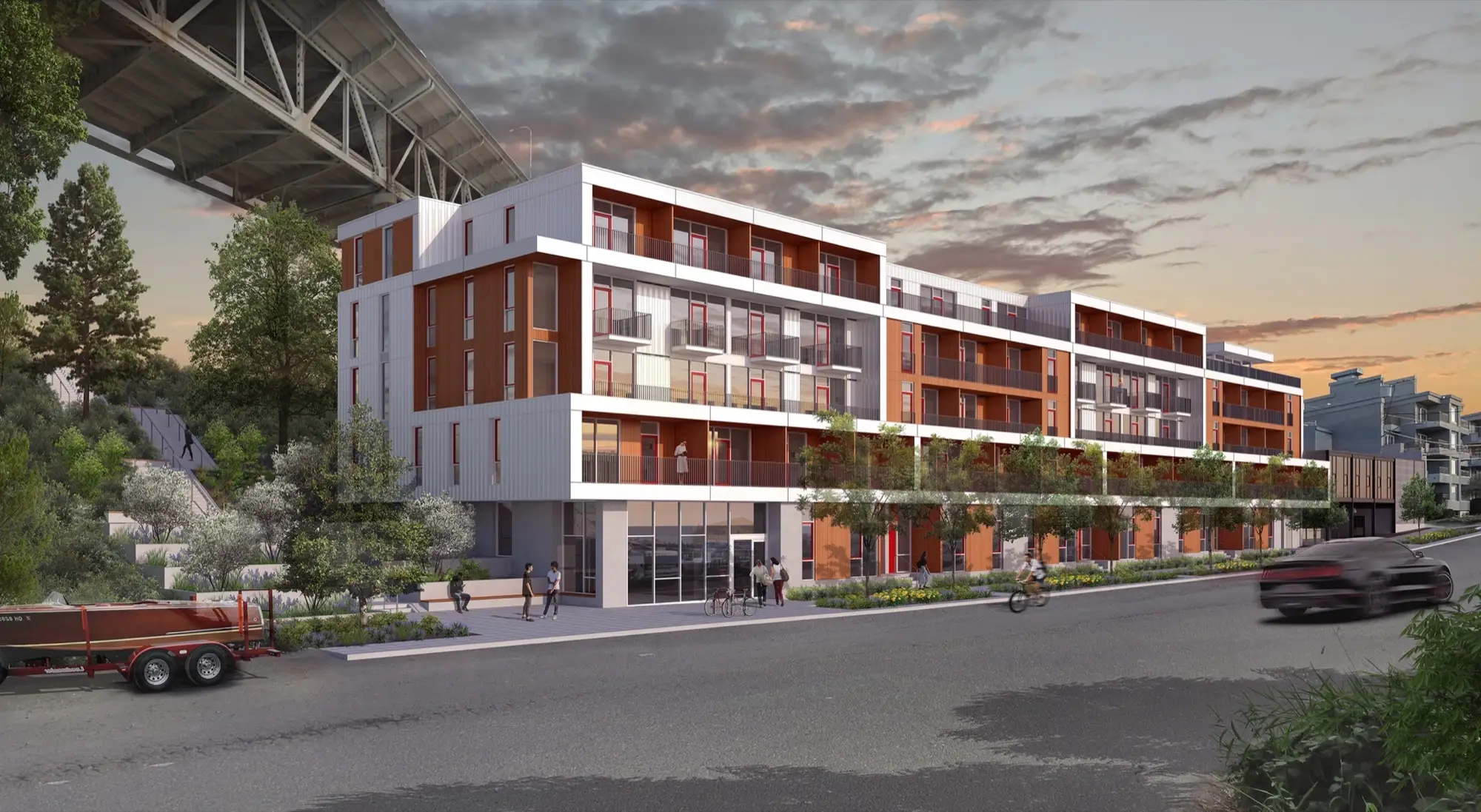
Eastlake Real Estate Partners, which publishes this guide, owns two Eastlake buildings that are leasing now. Flow Eastlake, at 3150 Fairview Ave E across the street from Lake Union, has studio, one-bedroom, open one-bedroom and two-bedroom homes, and takes part in MFTE, so some homes rent below market to households that meet the program’s income limits. Lyla Eastlake, at 2600 Eastlake Ave E, is a 1961 building fully renovated in 2021, with pet-friendly studios, one-bedrooms and two-bedrooms.
This guide does not list either building’s rents. For current prices and openings, see Flow’s availability page or call 206-387-6798, and use Lyla’s availability and tour page or call 206-849-0284. Both are on our Eastlake apartments page.
Quick answers
What is the average rent in Seattle?
Apartment List put Seattle's median rent at $2,073 a month in October 2026. RentCafe's average for buildings with 50 or more units was $2,251 in its October 30, 2026 update, and Zillow's typical rent was $2,227 in September 2026.
Are rents dropping in Seattle?
Slightly, by most measures. Apartment List found Seattle rents down 2.1 percent from October 2025 to October 2026 and RentCafe's average was down 1 percent, while Zillow's index rose 0.5 percent from September 2025 to September 2026.
How much is a 1 bedroom apartment in Seattle?
Apartment List's median one-bedroom rent was $1,935 in October 2026. RentCafe's average one-bedroom in buildings with 50 or more units was $2,211 for 666 square feet.
How much do you need to make to afford rent in Seattle?
To keep rent at 30 percent of gross income, multiply the monthly rent by 40. That is $77,400 a year for a $1,935 one-bedroom and $82,920 for the $2,073 citywide median.
How much do I have to make to afford $1500 rent?
An income of $60,000 a year keeps $1,500 rent at 30 percent of gross income. A landlord using a three-times-rent test would look for $4,500 a month, or $54,000 a year.
What is the cheapest rent in Seattle?
Studios are the cheapest apartments, averaging $1,621 in RentCafe's October 2026 update. Mount Baker, Victory Heights and Loyal Heights had the lowest neighborhood averages, and MFTE apartments rent below market for households under the City's income limits.
Sources
All accessed 2026-11-09.
- Apartment List, Seattle, WA Rent Report, November 2026: https://www.apartmentlist.com/rent-report/wa/seattle
- Apartment List, National Rent Report, October 28, 2026: https://www.apartmentlist.com/research/national-rent-data
- RentCafe, Seattle, WA Rental Market Trends, updated October 30, 2026: https://www.rentcafe.com/average-rent-market-trends/us/wa/seattle/
- Zillow Research, Housing Data (Zillow Observed Rent Index for Seattle city; New Renter Income Needed and New Renter Affordability for the Seattle metro): https://www.zillow.com/research/data/
- CoStar, Apartment trajectory quickly shifts in Seattle’s Lake Union area, March 17, 2026: https://www.costar.com/article/1112258167/apartment-trajectory-quickly-shifts-in-seattles-lake-union-area
- U.S. Census Bureau, Nearly Half of Renter Households Are Cost-Burdened, September 12, 2024: https://www.census.gov/newsroom/press-releases/2024/renter-households-cost-burdened-race.html
- Seattle Office of Labor Standards, Minimum Wage: https://www.seattle.gov/laborstandards/ordinances/minimum-wage
- Seattle Office for Civil Rights, FAQ on Alternative Source of Income and Subsidies: https://seattle.gov/civilrights/housing-rights/source-of-income-protections/faq-alternative-source-of-income-subsidies-and-preferred-employer-programs
- RCW 59.18.700: https://app.leg.wa.gov/RCW/default.aspx?cite=59.18.700
- RCW 59.18.710: https://app.leg.wa.gov/RCW/default.aspx?cite=59.18.710
- Washington State Department of Commerce, HB 1217 Landlord Resource Center: https://www.commerce.wa.gov/housing-policy/hb1217-landlord-resource-center/
- City of Seattle, Renting in Seattle: https://www.seattle.gov/rentinginseattle
- City of Seattle, Renting in Seattle, Move in Costs: https://www.seattle.gov/rentinginseattle/renters/moving-in/move-in-costs