Low-Income and Income-Restricted Apartments in Seattle: MFTE, Section 8 and the City's Other Programs
Income-restricted apartments in Seattle are homes reserved for households earning under a set share of area median income (AMI), with a capped rent, offered through City programs such as MFTE and Mandatory Housing Affordability, nonprofit housing groups and the Seattle Housing Authority. Section 8 is a voucher that pays part of the rent on a private apartment for Seattle households at or below 50 percent of AMI, chosen at random from a list.
Income-restricted apartments in Seattle are homes with a capped rent that only households under an income limit can rent. Most are in apartment buildings that set aside homes through City programs such as the Multifamily Tax Exemption (MFTE), Mandatory Housing Affordability (MHA) and Incentive Zoning, or in buildings owned by nonprofit housing groups, and you apply for them at each building. Section 8, now called the Housing Choice Voucher program, is rental help that goes with the household. The Seattle Housing Authority (SHA) picks voucher applicants at random, and its own apartments have waitlists that it says usually run two years or longer.
This guide explains who each program serves, how you apply and whether you’ll wait. For MFTE income limits, rent limits and application steps, see our MFTE guide.
What are income-restricted apartments?
An income-restricted apartment can only be rented by a household whose total income is under a limit, set as a percentage of area median income (AMI). The rent is capped too. In the City’s incentive programs, the cap covers rent, basic utilities and mandatory fees, and it equals 30 percent of the monthly income limit for that apartment’s AMI level (City of Seattle).
The cap belongs to the apartment. If you qualify for a one-bedroom set at 60 percent of AMI, you pay that unit’s capped rent whether your income is just under the limit or well below it.
Subsidized housing works the other way, with rent that follows your income. In SHA’s public housing, residents typically pay 30 percent of adjusted monthly income for rent and utilities (SHA), and voucher holders typically pay 30 to 40 percent (SHA).
What is the difference between low-income housing and Section 8?
Low-income housing is a specific apartment or building with income limits. Section 8 is a voucher a household takes to a private apartment. With a Housing Choice Voucher from SHA, you find a Seattle landlord who will rent to you, the voucher covers part of the rent and utilities, and you pay the rest (SHA). HUD says a voucher typically comes with 60 to 120 days to find a home (HUD).
Seattle bars landlords from discriminating against renters because they use Section 8 or another subsidy, or because their income comes from sources such as Social Security or child support. A landlord that uses an income-to-rent ratio has to apply it only to the share of rent you pay after the subsidy (SMC 14.08.040).
The two can be combined. The City’s compliance manual says households with a rent subsidy, including Housing Choice Vouchers, are eligible and encouraged to apply for income-restricted units in MFTE, MHA and Incentive Zoning buildings. They still have to income-qualify, but the subsidy isn’t counted as income (Compliance Manual).
Is MFTE the same as Section 8?
No. MFTE gives new apartment buildings a property tax break in return for capping the rent on 20 or 25 percent of their homes for households under set income limits. There is no subsidy; you pay the capped rent yourself. MFTE limits go up to 90 percent of AMI, well above the 50 percent voucher limit, so MFTE homes are open to many renters who earn too much for a voucher. A building’s MFTE agreement runs for the 12 years of its tax exemption, and owners can extend it at lower limits. You apply at the building. Our MFTE guide has the 2026 limits, rent caps and steps.
How does Section 8 work in Seattle?
SHA runs Seattle’s Housing Choice Voucher program. Household income must be at or below 50 percent of AMI. Households at or below 30 percent, and households that are homeless now or were in the past 12 months, get priority. Households between 31 and 50 percent who haven’t been homeless in the past year go back on the list until priority applicants are served, and households above 50 percent are removed (SHA).
The list is open all the time. You apply through the SHA Portal, which SHA says takes about 30 minutes if you have everyone’s names, birth dates and Social Security numbers, your total household income and a mailing address. SHA selects applicants at random whenever vouchers are available, so when you applied doesn’t change your odds. To stay on the list, you must check in once a month through SHA’s Save My Spot system. If you’re selected, SHA verifies eligibility then, and the voucher has to be used in Seattle for at least the first year.
SHA doesn’t publish a typical wait and suggests pursuing other housing help in the meantime. HUD notes that demand is high and lists are long, and suggests applying to more than one housing authority (HUD). The King County Housing Authority, whose vouchers cover King County outside Seattle and Renton, said when we checked in November 2026 that all of its waiting lists were closed (KCHA).
How do you apply for Seattle Housing Authority housing?
SHA also owns and runs apartments. In its Low-Income Public Housing program, households at or below 30 percent of AMI get priority, and households up to 80 percent can apply, though SHA says units for higher incomes are very limited. Residents typically pay 30 percent of adjusted monthly income for rent and utilities (SHA eligibility).
The Seattle Senior Housing Program is for people 62 and older and adults with disabilities. Rent is set at one of several levels based on income, and household income must be at least $11,700 for one or two people and no more than 80 percent of AMI (SHA eligibility).
Waitlists are by building. You can apply to up to two properties, each with its own list, and you must check in monthly with Save My Spot. SHA says, “Usually wait time is no shorter than two years, and often longer” (SHA).
Which nonprofits rent low-income apartments in Seattle?
Many of Seattle’s affordable apartments are owned by nonprofits that partner with the City’s Office of Housing. The Office of Housing doesn’t own or manage these homes or keep a waitlist; you contact each property’s managers and verify your income to apply (Office of Housing). A few of the larger providers:
- The Low Income Housing Institute (LIHI) lists its rentals online with a vacancy filter. You apply to buildings with openings; some keep waiting lists, and at those the rent is 30 percent of household monthly income.
- Bellwether Housing posts open apartments on its listings site and sends a weekly availability email. Recent Bellwether projects described on its site serve households from 30 to 80 percent of AMI.
- Community Roots Housing, called Capitol Hill Housing until 2020, sets income limits for most units in tiers from 30 to 80 percent of AMI and fills vacancies first come, first served. Its leasing line is 206-895-1400.
- Plymouth Housing houses adults leaving homelessness. It takes no direct applications and keeps no waitlist; apartments are filled only through King County’s Coordinated Entry system. In Seattle, the first step is an assessment, booked by calling Catholic Community Services at 206-328-5900.
Coordinated Entry, run by the King County Regional Homelessness Authority, serves households experiencing homelessness, and the authority says it doesn’t create new housing or guarantee a placement (KCRHA). The Office of Housing’s page lists other nonprofit providers and marks which fill units only through referrals.
What are MHA and Incentive Zoning apartments?
They are rent-restricted homes inside market-rate buildings, created through City agreements with developers. Under MHA, new development either includes affordable homes or pays into the Office of Housing’s fund for affordable housing (Office of Housing). The City’s compliance manual describes MHA rental homes set at 40 or 60 percent of AMI and Incentive Zoning homes at 40, 50 or 80 percent (Compliance Manual).
For renters, they work like MFTE: the building’s management certifies your income and leases the apartment. The City’s interactive map shows participating buildings, and if you can’t use it, OFH_MFTE@seattle.gov will send a list of MFTE, MHA, Incentive Zoning and other properties (Office of Housing). The main difference is how long the limits last: MFTE restrictions end with the building’s tax exemption, while most MHA agreements run 75 years (Compliance Manual).
Are there low-income apartments in Seattle with no waiting list?
Yes, though what’s open changes week to week. Look where you apply directly to a building:
- MFTE, MHA and Incentive Zoning homes have no City waitlist. Use the City’s map and call buildings to ask what’s available.
- Nonprofit housing: LIHI’s vacancy filter, Bellwether’s listings and weekly email, and Community Roots’ first-come vacancies show current openings.
- AptFinder.org, which the City links to, is a nonprofit site where owners post affordable apartments across Washington for households up to 80 percent of AMI, both subsidized and unsubsidized (Office of Housing).
The long waits are in the programs where rent follows your income: SHA housing, usually two years or more, and vouchers, with random selection and no set timeline. You can apply for an open income-restricted apartment now and stay on SHA’s voucher list at the same time.
How do you qualify for income-restricted apartments in Seattle?
Your household’s total gross income has to be at or under the limit for that apartment and your household size, and you verify it with documents before signing a lease (Office of Housing). Each program publishes its own limits, so confirm the figure with the program. The City’s 2026 table for Office of Housing-funded rentals, which it bases on HUD’s very low-income limits, shows where 30, 50 and 80 percent of AMI fall:
| Household size | 30% of AMI | 50% of AMI | 80% of AMI |
|---|---|---|---|
| 1 person | $34,530 | $57,550 | $92,080 |
| 2 people | $39,480 | $65,800 | $105,280 |
| 3 people | $44,400 | $74,000 | $118,400 |
| 4 people | $49,320 | $82,200 | $131,520 |
Source: Seattle Office of Housing, limits effective May 15, 2026. The same table caps the monthly cost of a one-bedroom, including basic utilities, at $925 at 30 percent of AMI, $1,541 at 50 percent and $2,467 at 80 percent.
As a rough guide, 30 percent of AMI is SHA’s priority group, 50 percent is the voucher limit, and 80 percent is the top for SHA public housing and for the nonprofit tiers described above. MFTE limits at 60 to 90 percent are in our MFTE guide. For Seattle’s rules on deposits, fees and tenant screening, see our guide to move-in fees and deposits.
Income-restricted homes at Flow Eastlake
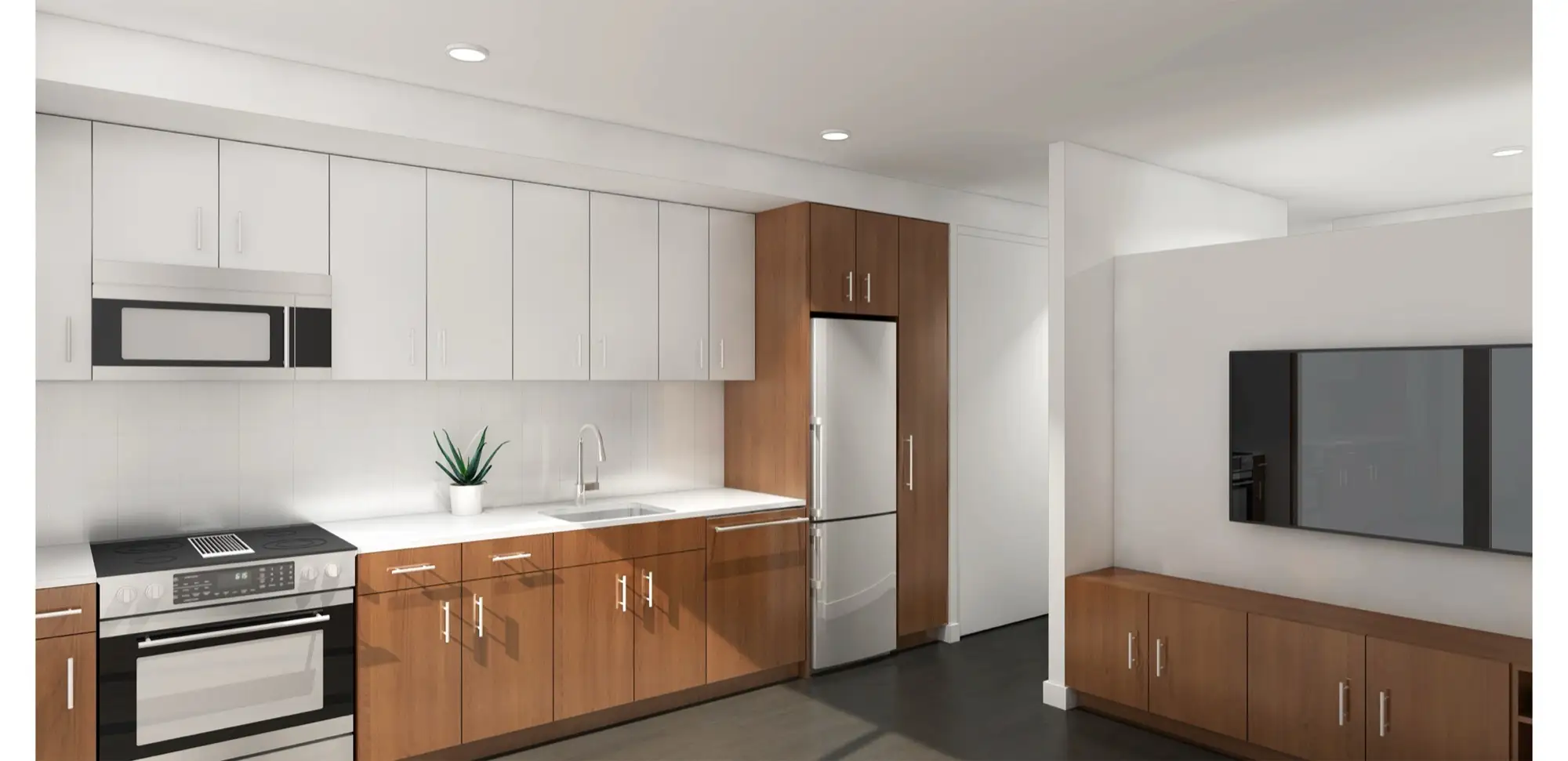
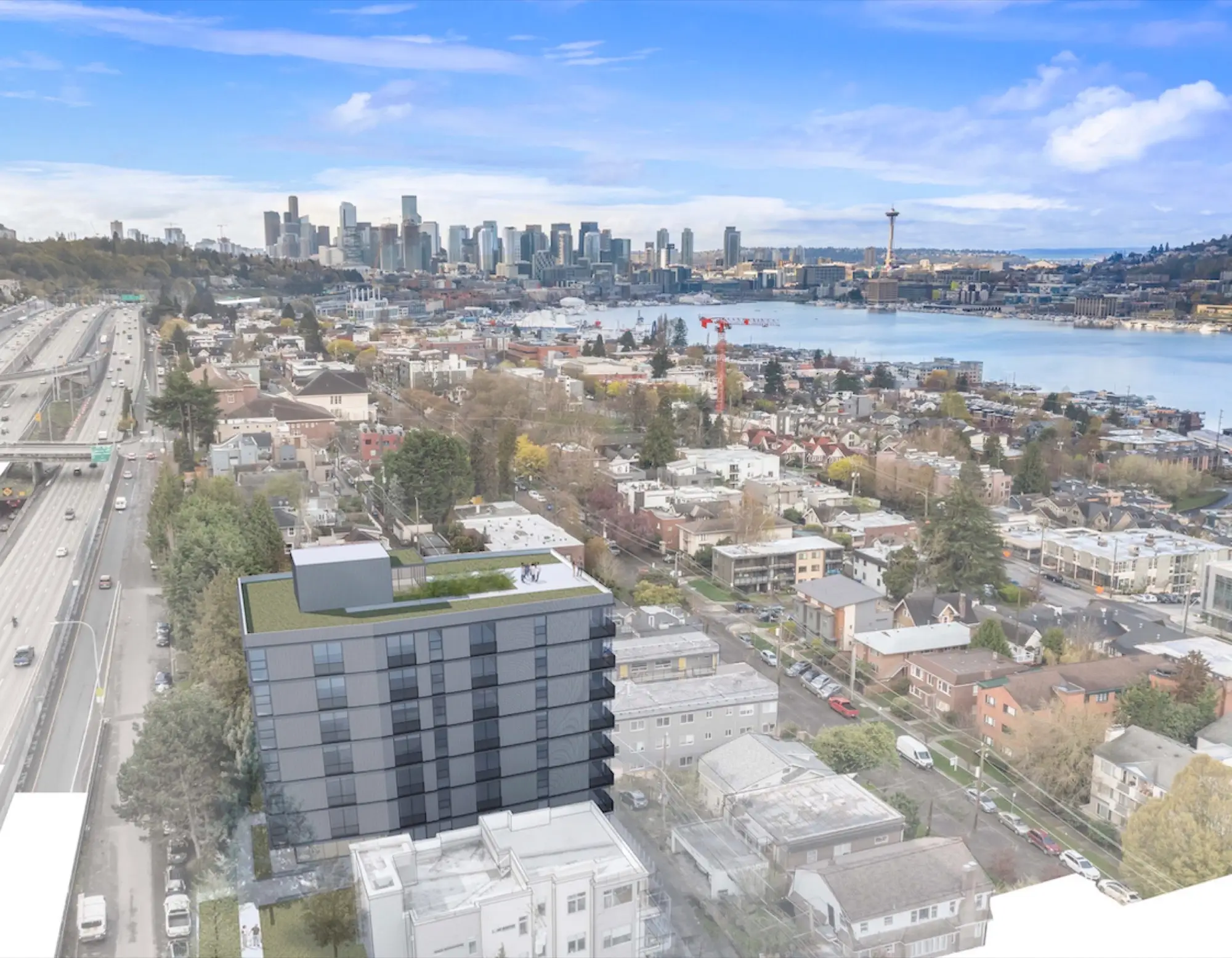
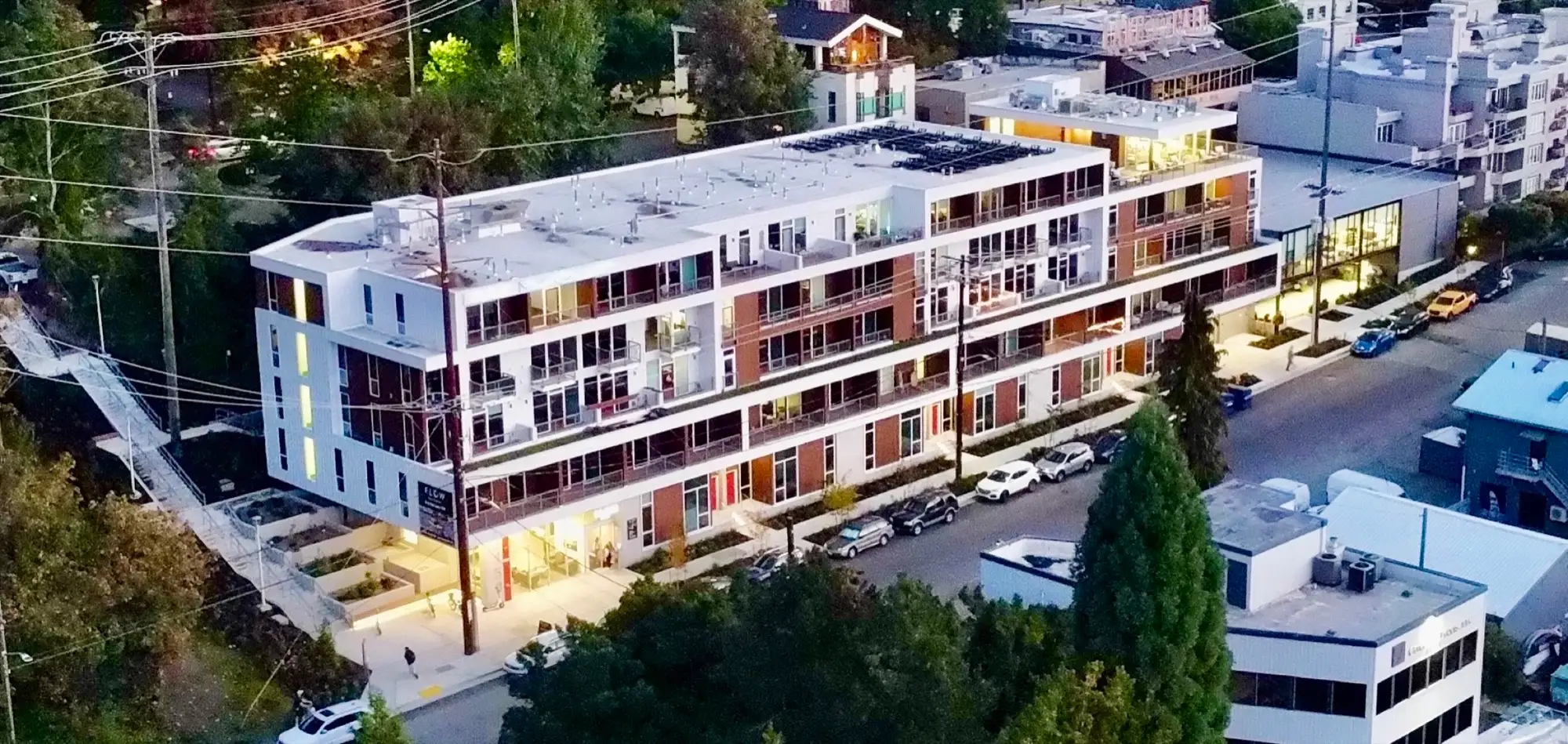
Flow Eastlake, which Eastlake Real Estate Partners built and owns at 3150 Fairview Ave E, across the street from Lake Union, takes part in MFTE. A share of its apartments rent below market to households that meet the program’s income limits, with the same finishes and amenities as every other home in the building. Flow has studios, one-bedrooms, open one-bedrooms and two-bedrooms.
To apply for an MFTE home at Flow, register with Pronto Housing, the online system Flow uses for MFTE applications, and read Flow’s MFTE page. The leasing office, open daily from 9:00 a.m. to 5:30 p.m. at 206-387-6798, can tell you what’s available. Our Eastlake apartments page covers Flow and Lyla Eastlake.
Quick answers
What are income-restricted apartments?
They are apartments reserved for households whose income is under a set percentage of area median income, with the rent capped for that apartment. In Seattle they include MFTE, MHA and Incentive Zoning homes in market-rate buildings and many nonprofit-owned apartments.
Are there any low-income apartments in Seattle that have no waiting list?
Yes. MFTE, MHA and Incentive Zoning homes have no City waitlist and are leased by each building, and nonprofits such as LIHI, Bellwether and Community Roots post current openings. Seattle Housing Authority housing and Section 8 vouchers involve waits.
Is MFTE the same as Section 8?
No. MFTE caps the rent on certain apartments in return for a property tax break and pays no subsidy, while a Section 8 voucher pays part of a household's rent. Voucher holders can apply for MFTE homes if they income-qualify.
What is the difference between low income housing and Section 8 housing?
Low-income housing is a specific apartment with income limits and a capped or income-based rent. Section 8 is a voucher a household uses to rent from a private landlord, and in Seattle the household typically pays 30 to 40 percent of its income.
What is the highest income to qualify for Section 8?
In Seattle, 50 percent of area median income. The City's 2026 table puts that at $57,550 for one person and $82,200 for four, and the Seattle Housing Authority verifies income when an applicant is selected.
Is there a Section 8 waiting list in Seattle?
Yes. The Seattle Housing Authority accepts applications at any time and picks applicants at random when vouchers become available, so there is no set wait, and you must check in monthly to stay on the list.
Sources
All accessed 2026-11-09.
- Seattle Office of Housing, Find Affordable Rental Housing: https://www.seattle.gov/housing/renters/find-housing
- Seattle Office of Housing, rent and income limits for Office of Housing-funded rentals and for MILU units, effective May 15, 2026: https://www.seattle.gov/housing/property-managers/income-and-rent-limits
- Seattle Office of Housing, Compliance Manual for MILU Regulatory Agreements, updated September 8, 2026: https://www.seattle.gov/documents/Departments/Housing/PropertyManagers/MFTECompliance/Compliance_Manual_MILU_Agreements.pdf
- Seattle Office of Housing, Mandatory Housing Affordability: https://www.seattle.gov/housing/housing-developers/mandatory-housing-affordability
- Seattle Municipal Code 14.08.040: https://library.municode.com/wa/seattle/codes/municipal_code?nodeId=TIT14HURI_CH14.08UNHOPR_14.08.040UNPREN
- Seattle Housing Authority, Housing Choice Vouchers and How to Apply: https://www.seattlehousing.org/housing/housing-choice-vouchers
- Seattle Housing Authority, SHA Housing and Eligibility: https://www.seattlehousing.org/housing/sha-housing
- HUD, Housing Choice Vouchers Tenants: https://www.hud.gov/helping-americans/housing-choice-vouchers-tenants
- King County Housing Authority: https://www.kcha.org/
- Low Income Housing Institute, Properties: https://www.lihihousing.org/properties
- Bellwether Housing: https://www.bellwetherhousing.org/
- Community Roots Housing, Find an Apartment: https://communityrootshousing.org/find-apartment/
- Plymouth Housing, Find Housing: https://plymouthhousing.org/find-housing/
- King County Regional Homelessness Authority, Coordinated Entry: https://kcrha.org/resources/about-coordinated-entry/
- Flow Eastlake, MFTE: https://www.floweastlake.com/mfte