MFTE Apartments in Seattle: Who Qualifies and How to Apply
MFTE apartments in Seattle are rent-capped homes inside regular apartment buildings, and a household qualifies when its income is under the City's limit for that apartment, which is set as a percentage of area median income. You apply directly with a participating building, which verifies your income before you sign a lease.
Every figure in this guide comes from the City of Seattle Office of Housing and reflects the limits that took effect May 15, 2026.
What MFTE means in Seattle housing
MFTE stands for Multifamily Property Tax Exemption. It is a City of Seattle program that gives new apartment buildings a break on property taxes, and in return the owner rents a share of the homes at capped rents to households under set income limits (Seattle Office of Housing). That share is 20 or 25 percent of the homes, depending on how many larger units the building has (Ordinance 127316).
Seattle adopted MFTE in 1998, and the Office of Housing calls it the largest such program in Washington, with more than 6,600 homes (MFTE Program 7).
It is one of several City programs that put income-restricted apartments in market-rate buildings, along with Mandatory Housing Affordability and Incentive Zoning (Find Affordable Rental Housing).
Which MFTE program a building is in
The rules for an MFTE apartment depend on the program version in the building’s agreement with the City, so ask the leasing office first. Program 7 took effect November 14, 2025, and the Office of Housing publishes separate limits for Program 7, Program 6, and older Programs 3, 4 and 5 (Income & Rent Limits).
Program 7 raised the limits and split bedrooms into two types (MFTE Program 7). A standard bedroom has four floor-to-ceiling walls and a window that opens outside. An alternative bedroom has four walls at least 7 feet high, at least two of them floor-to-ceiling, and apartments that use one carry a lower limit (Ordinance 127316).
The version can decide whether you qualify. A single person earning $80,000 is under the Program 7 limit for a one-bedroom with a standard bedroom ($86,325) but over the Program 6 one-bedroom limit ($70,647), as the tables below show.
A building’s tax exemption lasts up to 12 years, and the owner can apply to extend it for 12 more (Ordinance 127316). During an extension, limits drop to lower levels: 35 to 80 percent of area median income (AMI) under Program 7 and 30 to 80 percent under Program 6 (Program 7 limits, Program 6 limits).
MFTE income limits in Seattle for 2026
A household qualifies for an MFTE apartment when its total gross income is at or below the limit for that apartment’s AMI level and the household’s size. The tables below show the limits effective May 15, 2026, for buildings in their first 12 years.
Income means the yearly amount before taxes for everyone in the household, including wages, tips, self-employment earnings (counted net), retirement income and Social Security. A guarantor’s income is not counted, and a guarantor does not add to household size (Compliance Manual).
Program 6 income limits
| Household size | Studio (60% AMI) | One-bedroom (70% AMI) | Two-bedroom (85% AMI) |
|---|---|---|---|
| 1 person | $60,554 | $70,647 | $85,785 |
| 2 people | $69,210 | $80,744 | $98,047 |
| 3 people | $77,865 | $90,842 | $110,308 |
| 4 people | $86,506 | $100,924 | $122,550 |
Source: Program 6 limits; unit-size levels from the former Program 6 code in Ordinance 127316.
Program 7 income limits
| Household size | Studio over 320 sq ft (60% AMI) | One-bedroom, standard bedroom (75% AMI) | Two-bedroom, two standard bedrooms (90% AMI) |
|---|---|---|---|
| 1 person | $69,060 | $86,325 | $103,590 |
| 2 people | $78,960 | $98,700 | $118,440 |
| 3 people | $88,800 | $111,000 | $133,200 |
| 4 people | $98,640 | $123,300 | $147,960 |
Source: Program 7 limits. Other Program 7 layouts use other levels, such as 50 percent for studios of 320 square feet or less and 70 percent for a one-bedroom with an alternative bedroom (Ordinance 127316). The City’s PDFs cover households of up to six people.
MFTE rent limits by apartment size
An MFTE rent limit caps your total monthly housing cost, which includes rent, basic utilities, renter’s insurance and any mandatory fees. The City sets each cap at 30 percent of the monthly income limit for the apartment’s AMI level, assuming one person in a studio and 1.5 people per bedroom (Program 7 limits, Compliance Manual).
| Apartment | Program 6 maximum | Program 7 maximum |
|---|---|---|
| Studio | $1,513 (60% AMI) | $1,726 (60% AMI, over 320 sq ft) |
| One-bedroom | $1,892 (70% AMI) | $2,312 (75% AMI, standard bedroom) |
| Two-bedroom | $2,757 (85% AMI) | $3,330 (90% AMI, two standard bedrooms) |
Sources: Program 6 limits, Program 7 limits. Program 7 caps small studios (320 square feet or less) at $1,438 and one-bedrooms with an alternative bedroom at $2,158.
Parking, storage and pet rent are optional charges and do not count toward the cap. If you pay some utilities yourself, the building subtracts a City utility estimate, so the rent on your lease will be lower than the figure in the table (Compliance Manual).
How to apply for an MFTE apartment in Seattle
You apply for an MFTE apartment at the building, not with the City. The Office of Housing sets the rules and maps the participating buildings, but it does not lease apartments, track vacancies or keep a waitlist (Find Affordable Rental Housing).
- Find buildings on the City’s interactive MFTE map, which shows participating buildings by neighborhood and bedroom count, with income restrictions and contact details. If you can’t use the map, email OFH_MFTE@seattle.gov for a list.
- Contact the buildings you like and ask what is available, which MFTE program applies, and how they take applications.
- Complete income certification. Every adult in the household fills out an Income Declaration form listing all income sources, and the building verifies them with documents. Certification happens within 120 days before your lease starts and must be finished before you sign (Compliance Manual).
- Sign the lease. Once the certification is signed and you are found eligible, the lease must start within five days. If you are found ineligible, the building must tell you in writing and show its income calculation.
Staying in an MFTE apartment: recertification and rent changes
Expect to recertify your income each year, near your lease anniversary. You stay eligible as long as household income does not exceed 1.5 times the current limit for your apartment or 115 percent of AMI (Compliance Manual).
In the first two years after move-in you can confirm your income on a short self-certification form, and every third year you provide full documents again (MFTE Program 7).
If your income rises past the cap, the building must honor your current lease. After that you can stay at market rent or move, and management cannot evict you or make you move only because you are no longer income-eligible (Compliance Manual).
Your apartment’s AMI level stays the same, but the City updates the limits every year and the building can raise your rent up to the new limit (MFTE Program 7). For leases signed on or after November 14, 2025, yearly increases on an occupied MFTE apartment are capped at the lower of the City’s published change in rent limits or the state limit under RCW 59.18.700, never above 10 percent. The Program 7 limits sheet lists the current cap as 4.6 percent. Program 6 tenants whose leases were in effect before November 14, 2025, keep the older 4.5 percent cap on increases to their maximum rent until they move out.
MFTE and Section 8 are different programs
Seattle has Section 8 housing, now called the Housing Choice Voucher program and run here by the Seattle Housing Authority (SHA). It works differently from MFTE:
- A voucher is rental help that goes with the household. It covers part of the rent and utilities, and the household pays the rest, typically 30 to 40 percent of its monthly income. MFTE has no subsidy; the cap is attached to specific apartments.
- Vouchers are for households at or below 50 percent of AMI, with preference for households at 30 percent or below and people who are homeless. MFTE limits reach 90 percent of AMI.
- SHA draws voucher applicants at random from its list when vouchers are available. MFTE applicants apply directly to a building.
The two can overlap. The City’s Compliance Manual says voucher holders are eligible and encouraged to apply for MFTE apartments; they must still income-qualify, but the subsidy is not counted as income.
MFTE apartments at Flow Eastlake
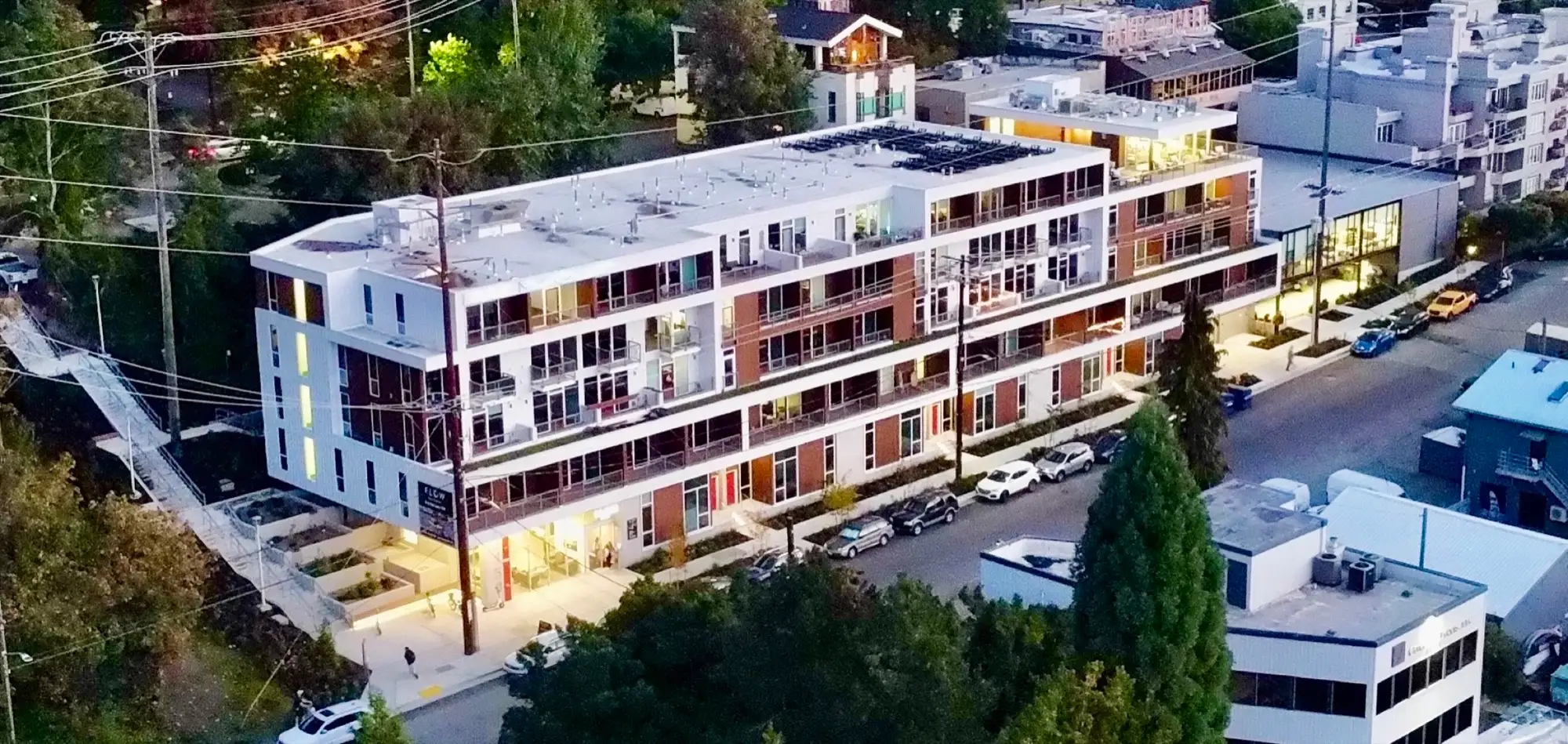
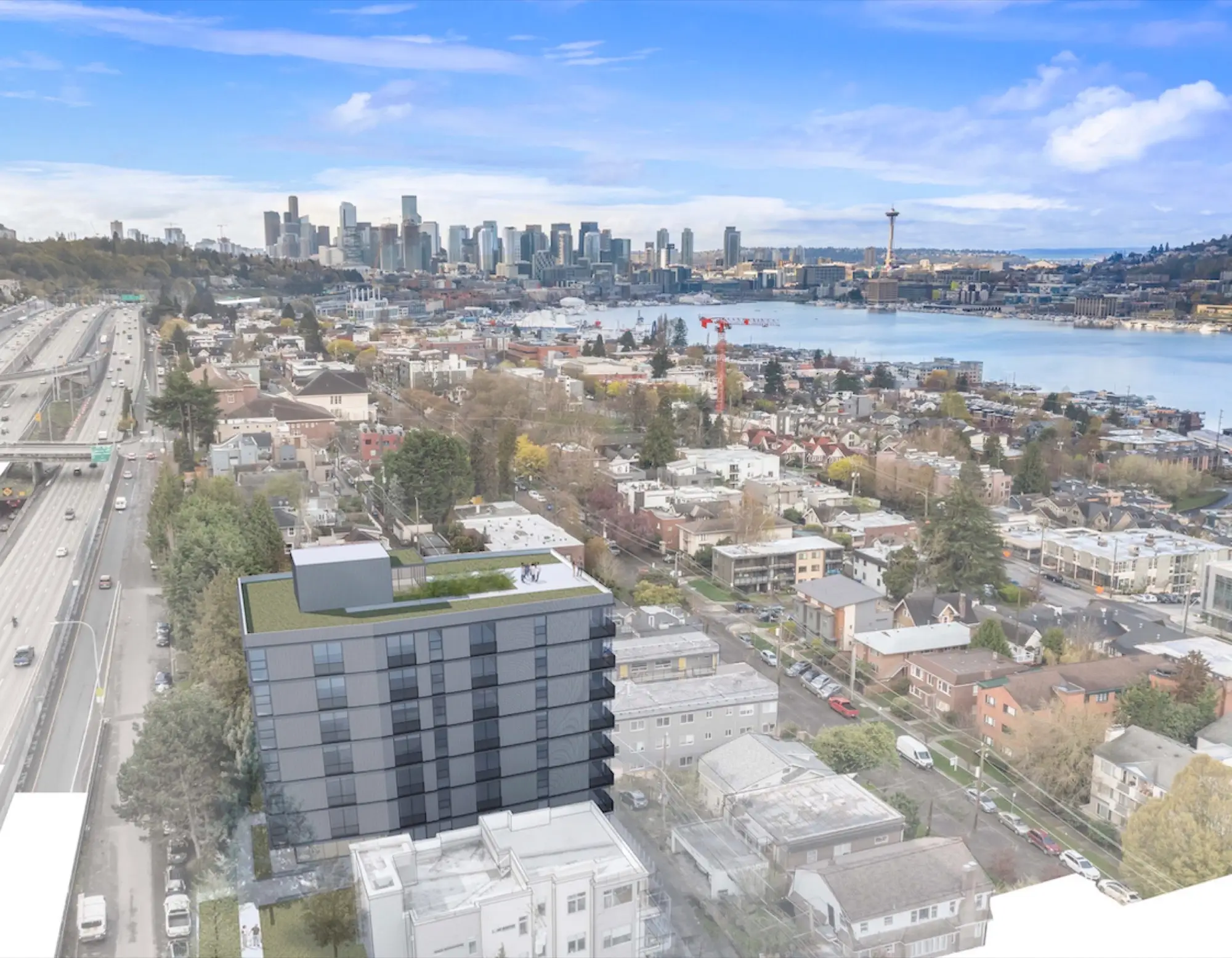
Flow Eastlake takes part in Seattle’s MFTE program. The building is at 3150 Fairview Ave E, Seattle, WA 98102, on Lake Union in the Eastlake neighborhood, with studio, one-bedroom, one-bedroom open and two-bedroom homes.
To apply for an MFTE home at Flow, start by registering with Pronto Housing, the online system Flow uses for MFTE applications. Flow’s MFTE page walks through the steps, and the leasing team at 206-387-6798 can tell you what is available and which limits apply. To learn more about the building or schedule a tour, visit the Flow Eastlake page.
Quick answers
What does MFTE mean in housing?
MFTE stands for Multifamily Property Tax Exemption. An MFTE unit is a capped-rent apartment reserved for a household under the program's income limit.
Is $80,000 enough to live in Seattle?
It depends on household size and rent. On the City's 2026 Program 7 table, $80,000 is just under 70 percent of AMI for one person ($80,570) and just over 60 percent for two people ($78,960). At the 30 percent standard the City uses for rent limits, $80,000 a year supports about $2,000 a month for rent and utilities.
Does the City keep a waitlist for MFTE apartments?
No. The Office of Housing does not keep a waitlist or vacancy information. Each building handles its own applications, and a building may keep its own waiting list.
Can full-time students rent an MFTE apartment?
Yes, with extra steps set out in the City's Compliance Manual. Undergraduates must show they receive need-based financial aid or subsidized loans through the FAFSA or WASFA. Graduate and PhD students can qualify the same way or by showing they file taxes independently and cannot be claimed as a dependent.
Can I add a roommate or partner after I move in?
Yes, but adding an adult to the household requires a new income certification for everyone in it (Compliance Manual).
Sources
All accessed 2026-11-07.
- Seattle Office of Housing, Multifamily Tax Exemption: https://www.seattle.gov/housing/housing-developers/multifamily-tax-exemption
- Seattle Office of Housing, Multifamily Property Tax Exemption (MFTE) Program 7: https://www.seattle.gov/housing/housing-developers/multifamily-tax-exemption/mfte-program-7
- Seattle Office of Housing, Find Affordable Rental Housing: https://www.seattle.gov/housing/renters/find-housing
- Seattle Office of Housing, Income & Rent Limits: https://www.seattle.gov/housing/property-managers/income-and-rent-limits
- Seattle Office of Housing, Current Limits: MFTE Program 6 Rental Units (effective May 15, 2026): https://www.seattle.gov/documents/Departments/Housing/Shared/IncomeLimits/2026-2027_MFTE_P6_Rental_IncomeLimits.pdf
- Seattle Office of Housing, Current Limits: MFTE Program 7 Rental Units (effective May 15, 2026): https://www.seattle.gov/documents/Departments/Housing/Shared/IncomeLimits/2026-2027_MFTE_P7_Rental_IncomeLimits.pdf
- Seattle Office of Housing, Compliance Manual for MILU Regulatory Agreements (updated September 8, 2026): https://www.seattle.gov/documents/Departments/Housing/PropertyManagers/MFTECompliance/Compliance_Manual_MILU_Agreements.pdf
- Seattle Office of Housing, Incentive Programs: https://www.seattle.gov/housing/property-managers/incentive-programs
- City of Seattle, Ordinance 127316 (MFTE Program 7): https://clerk.seattle.gov/~archives/Ordinances/Ord_127316.pdf
- City of Seattle MFTE map, linked from the Office of Housing: https://experience.arcgis.com/experience/ad9791778c1d40d196aac1ad0b012cff
- Seattle Housing Authority, Housing Choice Vouchers: https://www.seattlehousing.org/housing/housing-choice-vouchers
- Flow Eastlake, MFTE: https://www.floweastlake.com/mfte