Seattle Move-In Fees, Deposits and Screening Rules for Renters
In Seattle, a security deposit and nonrefundable move-in fees together can total no more than one month's rent, and the fees can only cover screening and cleaning, capped at 10 percent of that rent. A pet deposit can add up to 25 percent, renters can pay these costs in installments, and a City ban on most other rental fees applies to leases signed or renewed after July 1, 2027.
In Seattle, the security deposit and any nonrefundable move-in fees together cannot be more than your first full month’s rent. The fees can only pay for tenant screening or cleaning, and they are capped at 10 percent of that rent. A pet damage deposit can add up to 25 percent of a month’s rent, and you have the right to pay the deposit, the fees and any last month’s rent in installments. These limits come from chapter 7.24 of the Seattle Municipal Code (SMC) and go further than state law.
This guide is general information, not legal advice. We checked every rule below against the current code text in November 2026, and each one links to its source.
Is it legal to charge a move-in fee in Seattle?
Yes, within limits. Seattle allows one kind of nonrefundable move-in fee: a charge that covers a tenant screening report, criminal background check or credit report, or cleaning the apartment after you move out (SMC 7.24.020). Together these fees cannot exceed 10 percent of the first full month’s rent. If screening alone costs more, the landlord can charge the extra, up to what screening companies customarily charge in Seattle (SMC 7.24.035).
Beyond those fees, a landlord can collect only a security deposit, a pet deposit and last month’s rent at the start of a tenancy; any other one-time charge is prohibited (SMC 7.24.035.B). If you prepaid a cleaning fee, the landlord can’t also deduct cleaning from your deposit.
The fee has to be in a written rental agreement that clearly says it is nonrefundable. Otherwise it is treated as a refundable deposit, and with no written agreement at all, the landlord owes you the full amount (RCW 59.18.285).
How much can a Seattle landlord charge for a security deposit?
The security deposit plus nonrefundable fees cannot total more than the first full month’s rent (SMC 7.24.035.A). On an $1,800 apartment with a $150 screening and cleaning fee, the deposit can be no more than $1,650.
A pet damage deposit is separate, capped at 25 percent of the first full month’s rent, and can only cover damage your pet caused. None can be required for an assistance animal, and the code says no other fee may be charged for keeping a pet (SMC 7.24.038).
Before collecting any deposit, the landlord must give you a written rental agreement that explains when the deposit can be kept and a move-in checklist of the apartment’s condition, signed and dated by both of you, with a copy for you. The deposit goes into a trust account in Washington, and you get a receipt and the name and address of where it’s held (SMC 7.24.035.E and F, RCW 59.18.270). A landlord who collects a deposit without the checklist is liable to you for the deposit amount (RCW 59.18.260). Take dated photos on move-in day and add anything the checklist misses before you sign it.
Can you pay move-in costs in installments in Seattle?
Yes. You can choose to pay the security deposit and nonrefundable fees in installments, and the landlord can’t charge a fee or interest for it (SMC 7.24.035.C). Last month’s rent has its own installment right (SMC 7.24.036):
| Lease length | Security deposit and fees | Last month’s rent |
|---|---|---|
| Six months or longer | Six equal monthly payments, starting at move-in | Six equal monthly payments, starting at move-in |
| 30 days to six months | Up to four equal payments | Up to four equal payments, for leases of 60 days or more |
| Month to month | Two payments: at move-in and on the first day of the second month | No installment schedule in the code |
A pet damage deposit can be paid in three monthly payments starting when the pet moves in (SMC 7.24.038.C). A screening fee paid before the tenancy begins isn’t part of the plan.
The right doesn’t apply when the deposit and fees together are 25 percent of a month’s rent or less and no last month’s rent is due at move-in. A missed payment is a breach of the rental agreement, and the code allows a 10-day notice. Under state law, a landlord who refuses a proper written request for installments owes the tenant one month’s rent plus attorney fees (RCW 59.18.610), so ask in writing when you sign.
Why is my move-in fee so high?
Usually because several charges are added together. Only the screening and cleaning charges are “move-in fees” under Seattle code; rent and deposits are separate. Here is the most a landlord could ask for up front on a $2,000-a-month apartment with a pet, without installments:
| Charge | Seattle limit | On $2,000 rent |
|---|---|---|
| First month’s rent | The rent | $2,000 |
| Security deposit plus nonrefundable fees | One month’s rent combined; fees no more than 10 percent | Up to $2,000, with fees up to $200 |
| Pet damage deposit | 25 percent of one month’s rent | Up to $500 |
| Last month’s rent, if the lease requires it | One month’s rent | $2,000 |
| Total | Up to $6,500 |
A holding deposit doesn’t add to this, because it must be applied to your first month’s rent or security deposit (Renting in Seattle). On a lease of six months or longer, installments bring the amount due at move-in down to roughly $2,800: the first month’s rent, one-sixth of the deposit and fees, one-sixth of last month’s rent and one-third of the pet deposit.
If your total is higher, ask for an itemized list and question any one-time fee that isn’t for screening or cleaning, a deposit plus fees above one month’s rent, or a pet deposit above 25 percent. For monthly costs, see our guide to Seattle rent prices.
Did Seattle ban junk fees?
Yes, starting July 1, 2027. The City Council passed the rental fee ordinance 8 to 0 on August 11, 2026, and Mayor Katie Wilson signed it on August 18 as Ordinance 127497. It applies to rental agreements and renewals entered into after July 1, 2027 (SDCI presentation).
From then on, any fee not on the City’s permitted list is prohibited, whatever it’s called. The list includes late fees, deposits and move-in fees, screening fees, pet damage deposits, utility charges, a lost-key fee of up to $50, a lockout fee of up to $50 on weekdays from 8 a.m. to 6 p.m. and $150 at other times, a returned-payment fee of up to $31, documented damage repairs, and optional services you sign up for in writing and can cancel without penalty.
Some fees can’t be charged even as options, including fees for in-unit appliances (portable cooling rentals aside), everyday access to common areas, paying by check, money order or ACH, mail and packages, and adding or removing a tenant. Any fee for keeping a pet other than the pet damage deposit is banned “regardless of how the fee is named or described,” which covers monthly pet rent (new SMC 7.24.040).
Listings, ads and applications will have to show the rent, discounts, the utilities you pay, every fee, and the total monthly cost, repeated on a form of no more than two pages in front of the lease (new SMC 7.24.039).
A landlord can keep charging fees the ordinance prohibits until the end of an existing lease or July 1, 2027, whichever is later (Mayor’s Office FAQ). Some limits apply now. Late fees are capped at $10 a month, and landlords can’t charge for notices (SMC 7.24.034). Landlords must offer a way to pay that doesn’t require electronic banking, and in multifamily buildings above a size threshold, parking is a separate agreement you can decline (SMC 7.24.030.E and G).
What can a landlord charge to apply for or hold an apartment?
A landlord can charge for a screening report only after telling you in writing what it will check, what could lead to a denial, and the screening company’s name and address, along with your right to a free copy and to dispute errors. The fee can’t exceed the actual cost, and in Seattle you get a receipt (RCW 59.18.257, SMC 7.24.035.B.2). The landlord must also say whether it accepts a reusable screening report, one you buy once and share with several landlords; if it does, it can’t charge you for its own.
Once an apartment is offered to you, a landlord may charge up to 25 percent of the first month’s rent to hold it, with a receipt and written conditions for keeping it. If you move in, it’s credited to your first month’s rent or deposit; if you don’t, the landlord can keep it only as those conditions allow. Fees to join a waiting list are illegal (RCW 59.18.253).
What are Seattle’s tenant screening rules?
Seattle’s First-in-Time rule requires the landlord to give you its screening criteria in writing, with the minimum for each, and a list of what a complete application needs. Completed applications are screened in the order received. If the landlord needs more information, you get at least 72 hours to provide it without losing your place. The apartment goes to the first applicant who meets every criterion, who has 48 hours to accept (SMC 14.08.050). The first-qualified step doesn’t apply to units set aside for specific groups, such as households with low incomes, and the rule doesn’t apply to accessory units where the owner lives on the lot.
Under Seattle’s Fair Chance Housing rules, a landlord may not reject you because of an arrest record, conviction record or criminal history. The narrow exception is sex offender registry information about an adult, which a landlord can act on only with a legitimate business reason and a written notice; juvenile registry information can’t be used (SMC 14.09.025). After a 2023 federal appeals court decision, Yim v. City of Seattle, the code notes that landlords may ask about criminal history, though they still can’t use it to turn you down. Federally assisted housing where federal rules require a denial, and homes the owner shares, are excluded (SMC 14.09.115).
Seattle also bars discrimination against renters who use Section 8 or another subsidy, or whose income comes from sources such as Social Security or child support. An income-to-rent ratio has to be applied only to the rent you pay after any subsidy, counting all your income (SMC 14.08.040). Our guide to income-restricted apartments covers vouchers.
If you’re turned down or approved with conditions, the landlord must tell you why in writing (RCW 59.18.257). Neither the City nor the state sets a minimum credit score; each landlord sets its own written criteria. Our guide on how to rent an apartment in Seattle covers credit and income.
When do you get your security deposit back?
Within 30 days after your tenancy ends and you move out, the landlord must return the deposit or send a written statement of why it is keeping any of it, with estimates, invoices or receipts. It can’t deduct for normal wear and tear, for carpet cleaning unless excess wear is documented, or for damage to anything not recorded on the move-in checklist. A landlord who misses the deadline owes you the full deposit, and a court can award up to twice the deposit if the refusal was intentional (RCW 59.18.280, SMC 7.24.035.D).
How much notice do you get before a rent increase?
In Seattle, at least 180 days’ written notice before any increase in rent or other housing costs, or 30 days in subsidized housing where rent is based on income (SMC 7.24.030.A). State law bars increases in the first 12 months and caps them at 7 percent plus inflation or 10 percent, whichever is less, in any 12 months (RCW 59.18.700). The cap is 9.683 percent for 2026 and 10 percent for 2027 (Commerce). Buildings whose first certificate of occupancy is 12 or fewer years old are among the exemptions (RCW 59.18.710).
Where can Seattle renters get help?
The City’s Renting in Seattle Helpline is at (206) 684-5700 (SDCI presentation). For screening and First-in-Time questions, call the Seattle Office for Civil Rights at (206) 684-4500 (First-in-Time).
Renting at Lyla Eastlake
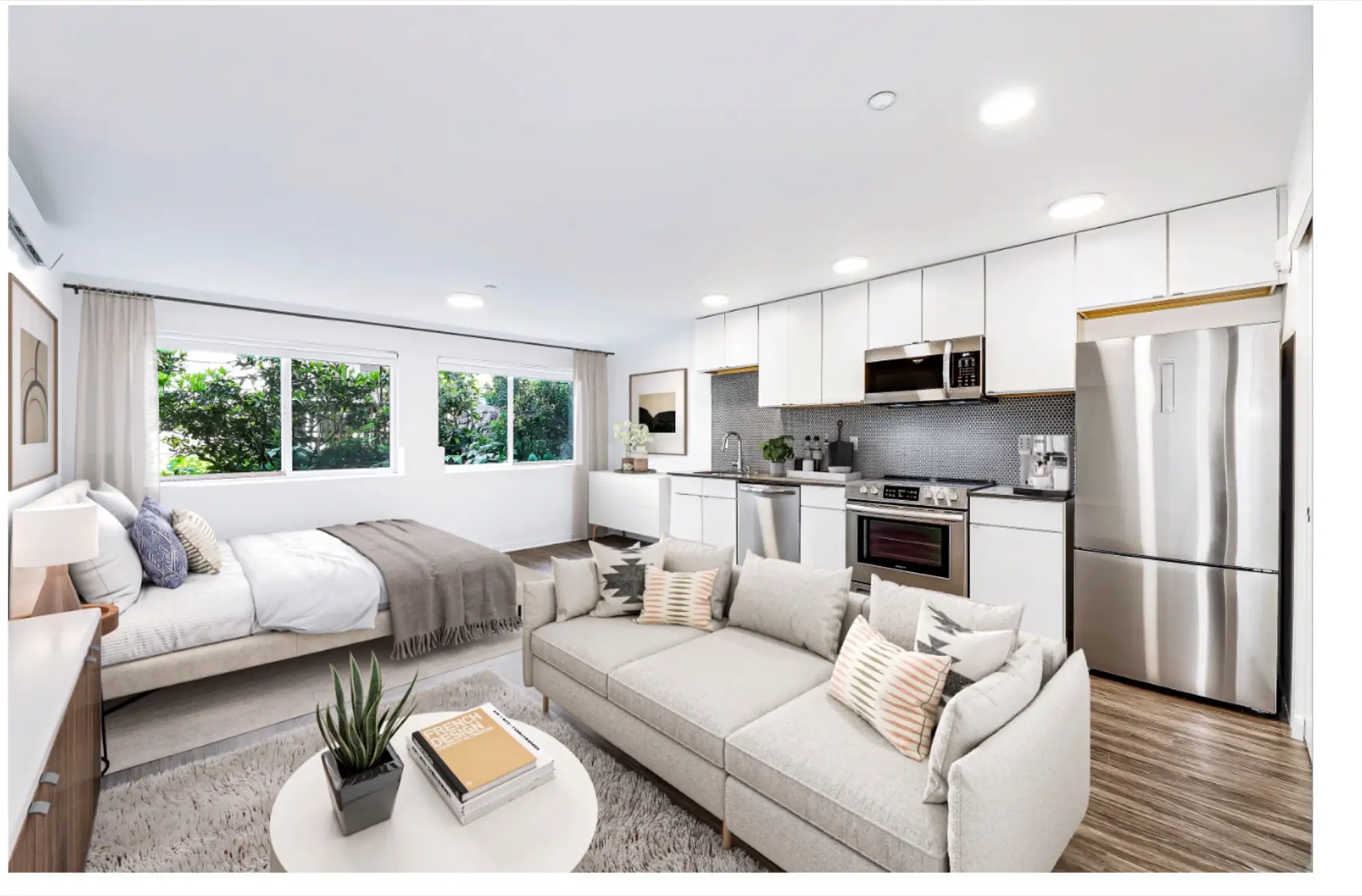
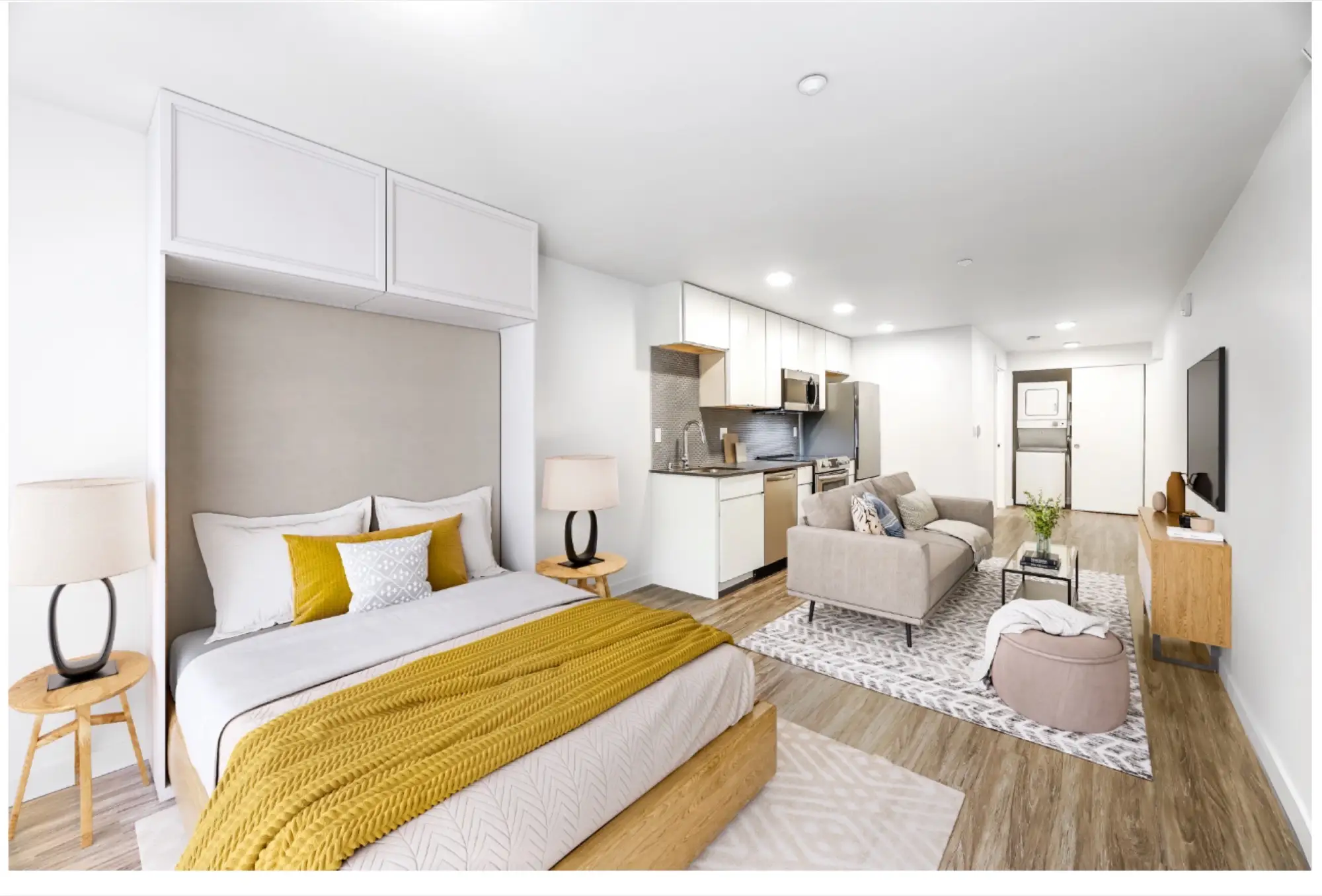
Eastlake Real Estate Partners, which publishes this guide, owns Lyla Eastlake at 2600 Eastlake Ave E. Lyla was built in 1961 and fully renovated in 2021 with new plumbing, electrical, heating and cooling, fire sprinklers, kitchens and bathrooms. It has studios, one-bedrooms and two-bedrooms and is pet friendly; ask the leasing team about the policy for your pet.
Wherever you apply, get the move-in costs and screening criteria in writing first. At Lyla, book a showing with the See availability and tour button on the Lyla page, apply online with the Apply button, or call 206-849-0284, daily from 8:00 a.m. to 7:00 p.m. Our other building, Flow Eastlake, is across the street from Lake Union; both are on our Eastlake apartments page.
Quick answers
Is it legal to charge a move-in fee?
In Seattle, yes, if the fee pays for tenant screening or move-out cleaning, totals no more than 10 percent of the first month's rent (screening costs above that excepted), and is written into the lease as nonrefundable. Seattle code does not allow other one-time charges at move-in beyond deposits and last month's rent.
Did Seattle ban junk fees?
Yes. Ordinance 127497, signed August 18, 2026, allows only a set list of rental fees and requires full fee disclosure in listings and applications. It applies to rental agreements and renewals entered into after July 1, 2027.
Is it normal for apartments to have a move-in fee?
Seattle allows a nonrefundable move-in fee for screening and cleaning, capped at 10 percent of a month's rent, and the deposit plus fees cannot exceed one month's rent. You can ask to pay the deposit and fees in installments.
Why is my move-in fee so high?
Most move-in totals combine first month's rent, a security deposit, fees, a pet deposit and sometimes last month's rent. Ask for an itemized list, check each charge against Seattle's limits, and ask in writing to pay the deposit, fees and last month's rent in installments.
How long does a Seattle landlord have to return a security deposit?
30 days after the tenancy ends and you move out. The landlord must return the deposit or send a written statement with receipts or estimates for anything kept, under RCW 59.18.280.
Sources
All accessed 2026-11-09.
- Seattle Municipal Code, chapter 7.24, Rental Agreement Regulation (sections 7.24.020 to 7.24.038): https://library.municode.com/wa/seattle/codes/municipal_code?nodeId=TIT7COPR_CH7.24REAGRE
- Seattle Municipal Code, sections 14.08.040 and 14.08.050 (First-in-time): https://library.municode.com/wa/seattle/codes/municipal_code?nodeId=TIT14HURI_CH14.08UNHOPR_14.08.050FI-T
- Seattle Municipal Code, chapter 14.09, Use of Screening Records in Housing: https://library.municode.com/wa/seattle/codes/municipal_code?nodeId=TIT14HURI_CH14.09USSCREHO
- City of Seattle, Ordinance 127497: https://clerk.seattle.gov/~archives/Ordinances/Ord_127497.pdf
- Seattle Department of Construction and Inspections, Rental Fee Regulation Ordinance presentation, October 2026: https://seattle.gov/documents/Departments/SDCI/About/2026HomeFair_RentalFeeRegulation%20Presentation.pdf
- Office of the Mayor, Rental Junk Fees Legislation FAQ: https://seattle.gov/mayor/vision-and-values/rental-fees
- Renting in Seattle, Move in Costs: https://seattle.gov/rentinginseattle/renters/moving-in/move-in-costs
- Seattle Office for Civil Rights, First-in-Time: https://seattle.gov/civilrights/civil-rights/fair-housing/first-in-time
- Residential Landlord-Tenant Act, RCW 59.18.253, .257, .260, .270, .280, .285, .610, .700 and .710: https://app.leg.wa.gov/RCW/default.aspx?cite=59.18
- Washington State Department of Commerce, HB 1217 Landlord Resource Center: https://www.commerce.wa.gov/housing-policy/hb1217-landlord-resource-center/