Can You Swim in Lake Union? Water Quality, Swim Spots and Safety
Yes, within limits. Seattle law allows swimming in Lake Union within 50 feet of the shore or a pier, but none of the City's lifeguarded beaches is on the lake, King County does not test any Lake Union beach for bacteria, and swimming is banned at Gas Works Park, in the Fremont and Montlake cuts and under any bridge.
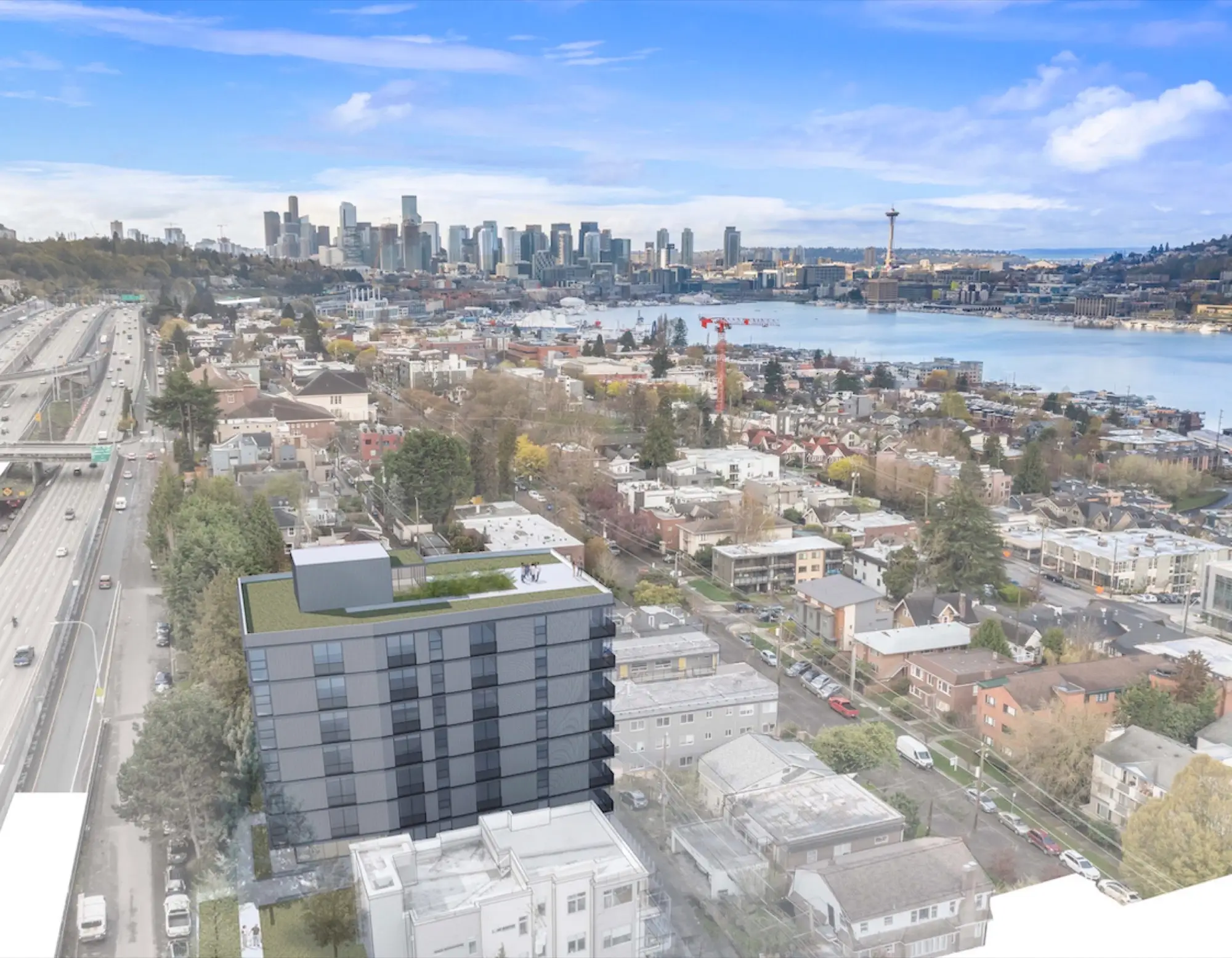
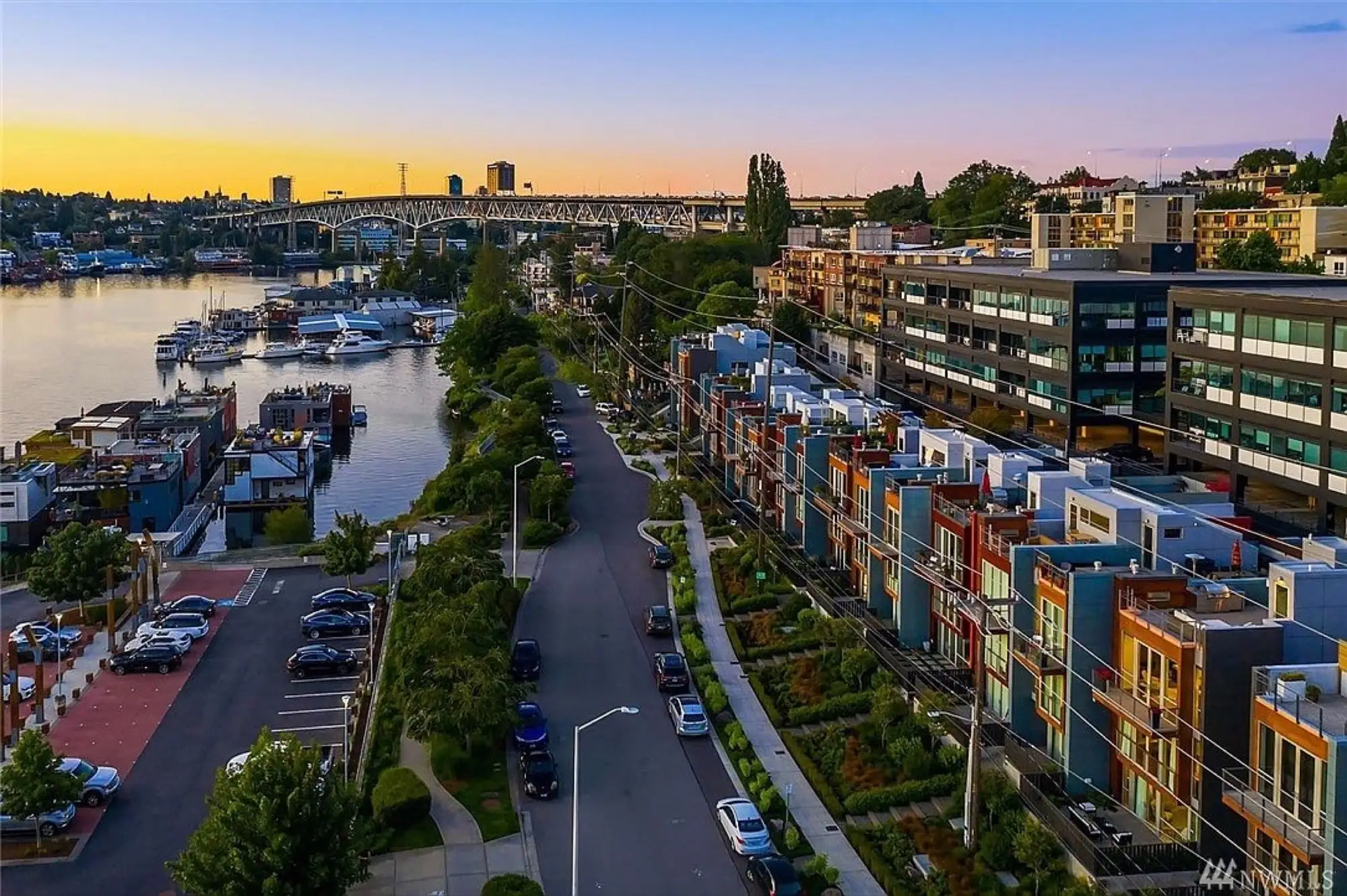
Lake Union is a working lake. Its shore is lined with marinas, floating home docks and a seaplane terminal, and none of Seattle’s lifeguarded beaches is on it. Swimming close to shore is legal in most places, and this guide covers the rules and the risks, along with where to check water conditions on the day you go.
Is it legal to swim in Lake Union?
Yes, close to shore. Seattle’s harbor code covers all City waters, Lake Union included. Under Seattle Municipal Code 16.28.010, you may swim in a designated swimming area or within 50 feet of the shore or a pier. To go farther out, you need a boat within 25 feet of you that carries a life jacket for each person aboard and for each swimmer, as Seattle Parks and Recreation explains the rule. Parks says the limit exists because boaters have trouble seeing swimmers.
The same section bans swimming outright in these places:
- the Fremont Cut and the Montlake Cut
- under any bridge
- in the Ballard Locks or inside any guidewall
- within 300 feet of a ferry slip or boat launch ramp
Gas Works Park is off limits as well. Seattle Parks prohibits swimming, wading, fishing and launching boats there because the lake sediment contains hazardous substances.
Is Lake Union safe to swim in?
It carries more risk than a guarded beach. Seattle Parks staffs up to nine lifeguarded beaches each summer, all on Green Lake and Lake Washington. Seattle and King County’s public health department says most drownings happen at unguarded locations.
The lake is also busy. Kenmore Air has run a seaplane terminal at 950 Westlake Ave N, on the south shore, since 1993, and floatplanes take off and land on the open water. Our kayaking guide explains the summer seaplane warning buoys. From a boat, a swimmer’s head is easy to miss, which is the reason Parks gives for the 50-foot rule.
The water can also be cold. King County warns that its lakes can be very cold even on hot days, and that water below 70°F can tire even strong swimmers quickly. Lake Union’s summer surface water routinely tops 68°F, and the deeper water stays colder, according to King County’s monitoring.
If you do swim in Lake Union
These habits come from Seattle Parks’ swimming safety tips and Public Health’s swim safety page:
- Stay within 50 feet of shore unless a boat carrying life jackets is within 25 feet of you.
- Wear a Coast Guard-approved life vest. Parks says it is easy to misjudge open water and your own skills, and a vest still lets you swim every stroke except underwater.
- Stay close to shore, and get out to rest if you are cold or tired.
- Skip alcohol before and during a swim, and keep young children within arm’s reach.
- Shower or towel off right after. Parks says this helps prevent swimmer’s itch, a rash caused by a tiny parasite carried by waterfowl and snails.
Is Lake Union clean?
It is much cleaner than it was, but no beach on it is tested for swimming. King County samples the middle of the lake for bacteria every month and warns that bacteria near shore may be higher, so those results can miss problems along the shoreline. Its weekly swim beach program tested 30 beaches in 2026, and none of them is on Lake Union.
In its 2017 review, King County reported that fecal coliform bacteria had fallen significantly since monitoring began in 1976, helped by work such as connecting houseboats to the sewer in 1967. Levels still exceeded one of the state’s water quality criteria, though less often than in earlier decades.
Heavy rain makes it worse. Older parts of Seattle have combined sewers that carry stormwater and sewage in the same pipe, and in heavy rain they can overflow into lakes. King County says these overflows usually happen between October and May and are about 10 percent sewage.
Toxic algae has shown up before. Washington’s toxic algae database shows Lake Union samples above the state’s microcystin guideline in November and December 2014, and below it in samples from May 2021 and December 2023.
The lake bottom is contaminated in places. King County names sediment hot spots near Gas Works Park, in southeast Lake Union and in Salmon Bay, with metals, PAHs and PCBs among the chemicals found. At Gas Works, the Washington Department of Ecology lists a 56-acre in-water cleanup area and expects in-water construction to begin in 2029 or 2030.
How to check Lake Union water conditions today
There is no daily swim rating for Lake Union, so check these before you go:
- King County’s combined sewer overflow map shows recent overflows and updates every 10 minutes. Stay out of the water near an overflow for 48 hours.
- The state’s Lake Union toxic algae page lists test results, and nwtoxicalgae.org takes reports of visible blooms.
- King County’s Lake Union monitoring data has the mid-lake results.
- After heavy rain, King County advises staying out of any lake for at least 24 hours and keeping away from pipes or streams that drain to the shore.
Is Lake Union freshwater or saltwater?
Freshwater. The Hiram M. Chittenden Locks in Ballard hold Lake Union and Lake Washington 20 to 22 feet above sea level and keep Puget Sound’s salt water from mixing into them, according to the U.S. Army Corps of Engineers, which runs the locks. Some salt still gets through: King County finds higher salinity in the lake’s deep water in summer.
The lake came first. Pioneer Thomas Mercer named it Lake Union in 1854, HistoryLink records. The 8.6-mile Lake Washington Ship Canal, with the Fremont Cut, the Montlake Cut and the locks, was completed in 1916 and joined it to Lake Washington and the Sound. The locks formally opened on July 4, 1917.
How deep is Lake Union?
About 50 feet at its deepest, at the southwest end, with an average depth of 34 feet, according to King County. The lake covers about 580 acres, and King County describes its shores as lined with marinas, houseboat moorage, commercial docks, dry docks and industry.
Why can’t you dive in Lake Union?
Underwater diving needs a permit. Seattle’s harbor code, SMC 16.28.020, makes it unlawful to skin dive or scuba dive in Lake Union or Portage Bay without a written permit from the chief of police.
Diving in head first is a separate risk. Seattle Parks says to check for hidden objects and water plants, and when in doubt, don’t dive or jump. Public Health says not to dive or jump into unknown water. Jumping from a bridge is ruled out by the swimming code, which bans swimming under any bridge.
Does Lake Union have sharks?
No. Puget Sound has sharks, including the Pacific spiny dogfish and the bluntnose sixgill, according to the Puget Sound Institute, but they live in salt water, and Lake Union is fresh water held behind the locks. We could not find a credible report of a shark in the lake.
Where to swim instead: Seattle’s lifeguarded beaches
For a guarded swim, Seattle Parks staffs up to nine beaches from early summer to Labor Day: Green Lake East and Green Lake West, plus Madison, Madrona, Magnuson, Matthews Beach, Mount Baker, Pritchard Island and Seward Park on Lake Washington. The 2026 season is over, and Parks will post 2027 dates in the spring.
King County tests the water at these beaches every week from mid-May to mid-September, with results usually posted on Wednesday afternoons. You can sign up at kingcounty.gov/swimbeach for an alert whenever Public Health closes or reopens a beach.
Getting in the water from Eastlake
Eastlake’s public shore is a string of small parks at the ends of streets along Fairview Avenue East. The Seattle Department of Transportation’s street end data tags four of them for kayak access: E Louisa St, which slopes gradually to the shore; E Allison St, with concrete steps to the water; E Hamlin St; and E Martin St, known locally as Good Turn Park. None is a lifeguarded beach, and the 50-foot rule applies. Much of the shore between them is private floating home docks and marinas, which our guide to Eastlake’s houseboats covers. For paddling from these spots, see our kayak and paddleboard guide.
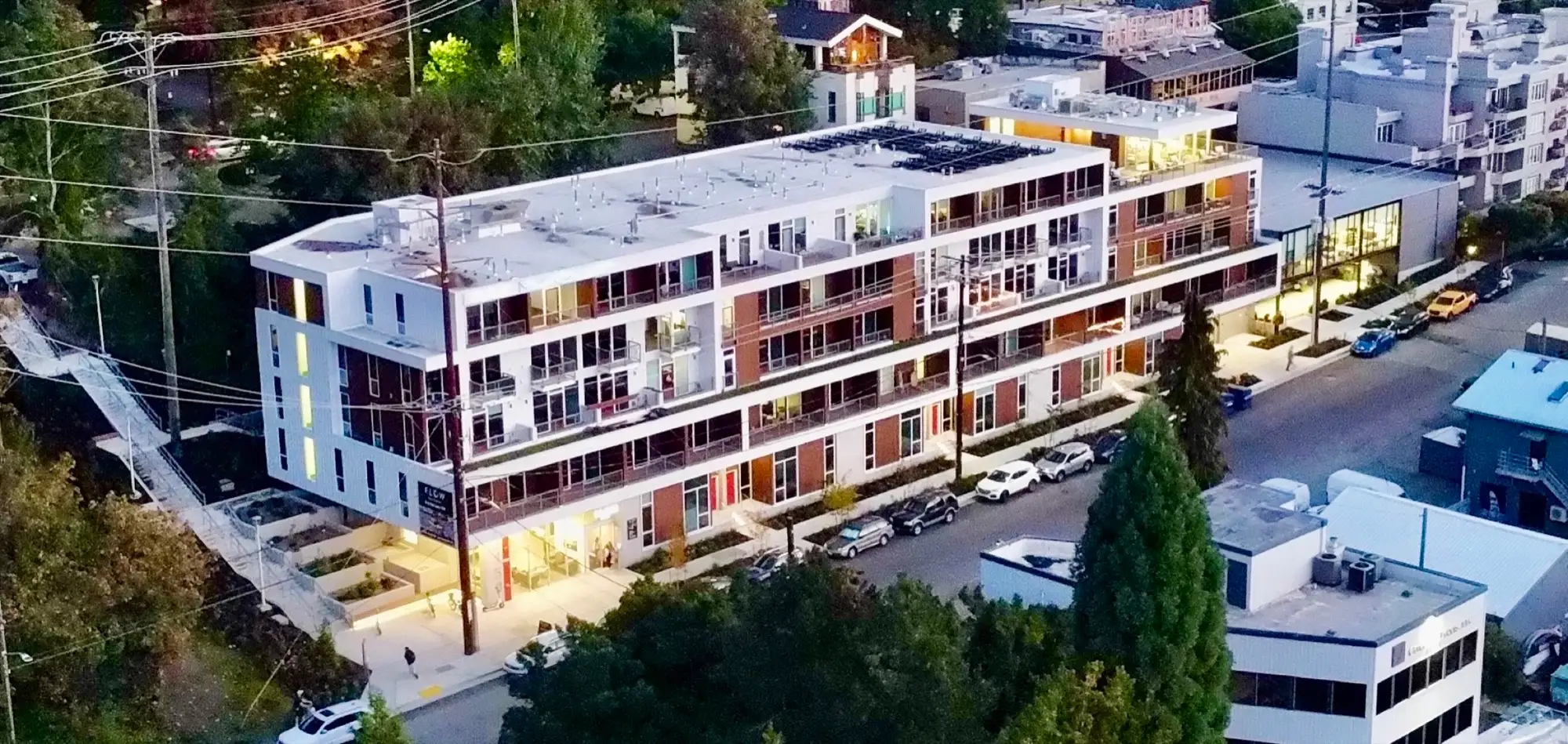
Flow Eastlake, at 3150 Fairview Ave E, is across the street from Lake Union, with direct beach access and free kayak and paddleboard storage for residents. Next to the building, a biofiltration system cleans a large share of the rainwater runoff from I-5 that has polluted the lake for more than fifty years. The rules and cautions in this guide apply at Flow’s beach as they do anywhere else on the lake. For the rest of the neighborhood, see our guide to living in Eastlake.
Quick answers
Is Lake Union okay to swim in?
Swimming within 50 feet of shore is legal in most of the lake, but there are no lifeguards and King County does not test any Lake Union beach for bacteria. Stay out for 24 hours after heavy rain, check the sewer overflow map first, and never swim at Gas Works Park.
Is Lake Union freshwater or saltwater?
Freshwater. The Ballard Locks hold Lake Union 20 to 22 feet above sea level and keep Puget Sound's salt water out, though some salt reaches the deepest water in summer.
How deep is Lake Union?
About 50 feet at its deepest point, at the southwest end, with an average depth of 34 feet, according to King County.
Does Lake Union have sharks?
No. Puget Sound's sharks, such as the spiny dogfish and the sixgill, live in salt water, and Lake Union is fresh water behind the locks. We found no credible report of a shark in the lake.
Is Lake Union clean today?
No agency posts a daily swim rating for Lake Union. Check King County's sewer overflow map, which updates every 10 minutes, and the state toxic algae site for the lake before you get in.
Sources
All accessed 2026-11-09.
- Seattle Parks and Recreation, Rules and Regulations: https://www.seattle.gov/parks/about-us/rules-and-regulations
- Seattle Parks and Recreation, Swimming Beaches: https://www.seattle.gov/parks/recreation/swimming-beaches
- Seattle Parks and Recreation, Gas Works Park: https://www.seattle.gov/parks/parks/gas-works-park
- Seattle Parks and Recreation, Parkways, “Open-water swimming rules” (May 25, 2017): https://parkways.seattle.gov/2017/05/25/open-water-swimming-rules/
- Seattle Municipal Code, Sections 16.28.010 and 16.28.020: https://library.municode.com/wa/seattle/codes/municipal_code
- Public Health, Seattle and King County, Swim safety: https://kingcounty.gov/en/dept/dph/health-safety/safety-injury-prevention/water-safety/swim-safety
- King County, Lake swimming beach bacteria and temperature: https://kingcounty.gov/en/dept/dnrp/nature-recreation/parks-recreation/king-county-parks/water-recreation/swimming-beach-bacteria-temperature
- King County Open Data, Freshwater Swim Beach Data: https://data.kingcounty.gov/d/mbzm-4r9y
- King County, Combined sewer overflow status: https://kingcounty.gov/en/dept/dnrp/waste-services/wastewater-treatment/sewer-system-services/cso-status
- King County, Lake Union Monitoring Overview: https://green2.kingcounty.gov/lakes/LakeUnion.aspx
- King County, SciFYI, “Lake Union and the Ship Canal: A history of pollution and work toward a solution” (January 2017): https://your.kingcounty.gov/dnrp/library/water-and-land/science/newsletter/2017/january/lake-union-and-ship-canal-history-pollution.pdf
- Washington State Toxic Algae, Lake Union results: https://www.nwtoxicalgae.org/Data.aspx?SiteID=28
- Washington Department of Ecology, Gas Works Park cleanup site: https://apps.ecology.wa.gov/cleanupsearch/site/2876
- U.S. Army Corps of Engineers, Seattle District, Chittenden Locks: https://www.nws.usace.army.mil/Missions/Civil-Works/Locks-and-Dams/Chittenden-Locks/
- HistoryLink, “Seattle’s Historic Houseboats” (Essay 9507): https://www.historylink.org/File/9507
- Kenmore Air, Terminals: https://kenmoreair.com/terminals/
- Puget Sound Institute, “Mysterious sharks gain recognition as scientists explore their contributions to Puget Sound”: https://www.pugetsoundinstitute.org/mysterious-sharks-gain-recognition-as-scientists-explore-their-contributions-to-puget-sound/
- Seattle Department of Transportation, Shoreline Street Ends map data: https://services.arcgis.com/ZOyb2t4B0UYuYNYH/arcgis/rest/services/Shoreline_Street_Ends/FeatureServer/0